The Ultimate Nonprofit Capacity Building Roadmap: A 3-Step Plan
You are the visionary, but you have become the bottleneck.
You are frustrated watching major opportunities stall because you are the single point of failure. If you fail to fix this, you will risk your sanity and jeopardize your mission. But if you succeed, you will build a thriving organization that scales beyond you.
Key Takeaways
This roadmap for nonprofit capacity building helps you build a team of owners to free your headspace, get operational freedom through focused funding, and secure a resilient legacy by empowering your community.
The 3 Core Drivers of Nonprofit Stagnation
🧠 Headspace
You are taking on too many in the weeds jobs. This blocks the strategic work that only you can do. You have no time to think.
💲 Funding
Your target funders are unlikely to pay for the operational help you truly need. This leaves critical money on the table and stifles growth.
💁 Community
Your supporters lack clear direction or are not reliable. It feels faster and safer to do the work yourself than to manage them.
🪴
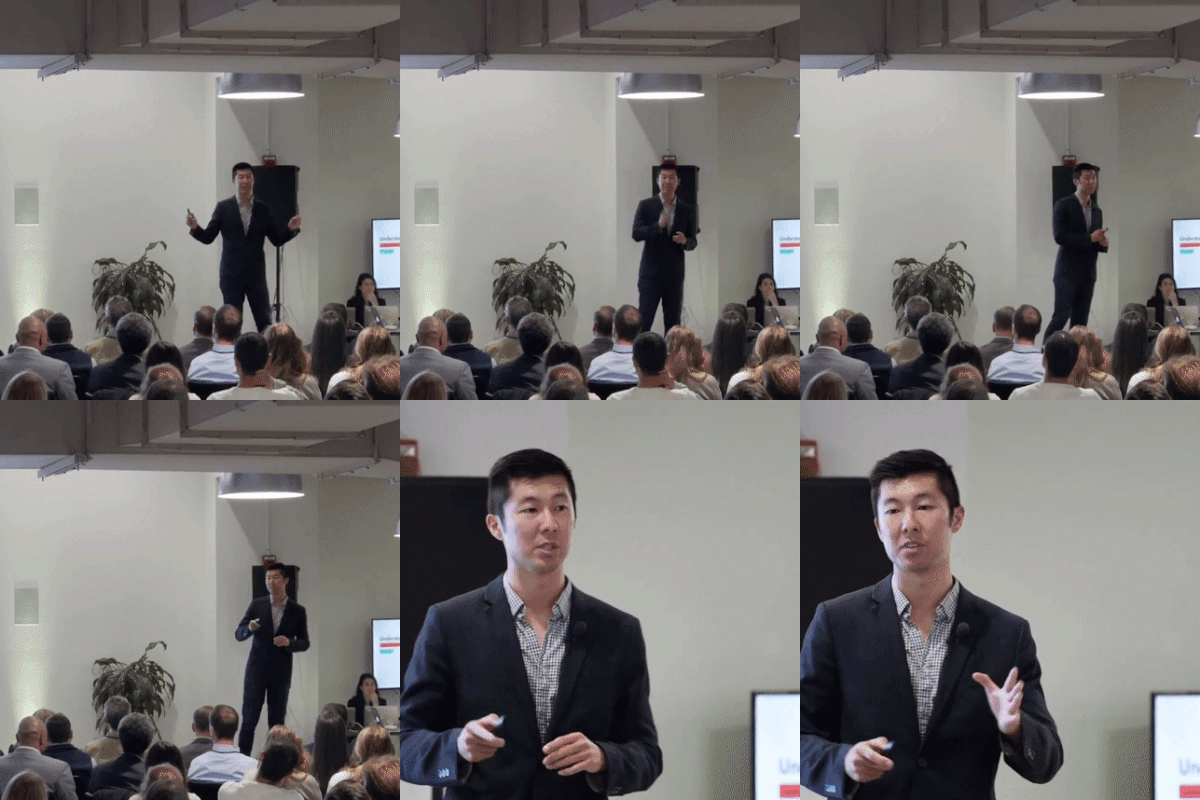
A Note From the Author (Dan Wu, JD/PhD)
As a former startup SVP of Product, I've lived the challenges this covers. I've used similar frameworks and tools to build and manage responsible, high-growth products generating 6-7 figures of annual revenue.
I help social impact leaders find who will buy, what to say, and what to sell, fusing Silicon Valley product thinking & Harvard PhD insight.
Step 1: Build a Team of Owners for Better Nonprofit Capacity Building
What This Is
This step is about reclaiming your strategic time. You will build a high impact core team (staff or board) that proactively solves the right problems without constant oversight.
Why It Matters
This directly solves the Headspace driver. By offloading tasks to a team of owners, you get the mental space to focus on the high value work only you can do.
How You Can Use It
Use the Personal Impact Roadmap to see what work to offload. Then use the Minimum Viable Role Profile to design the role for either staff or board members. Finally, use the Success Playbook to set clear expectations and ensure they succeed.
Examples (Toggle for more)
Less Productive: Sarah, the Executive Director of the Green Futures Initiative, feels overwhelmed. She continues to approve every social media post and draft every grant proposal herself because she fears a drop in quality.
More Productive: Sarah uses the core Step 1 tools to build capacity with her team and board members.
Personal Impact Roadmap: Sarah identifies exactly what to offload to protect her highest-value work.
Minimum Viable Role Profile: She designs the leanest, "high ownership" role. This role is not a generic job description; it is a custom profile focused solely on the specific activities that were previously stalling her strategic work.
Success Playbook: She sets clear best practices and expectations to set them up for success. Instead of just listing tasks, she defines the specific metrics that indicate "ownership." This includes the process for raising issues so that Maria, the new staff member, solves problems before they ever reach Sarah’s desk.
Step 2: Get Operational Freedom for Better Nonprofit Capacity Building
What This Is
This step focuses on raising "Capacity Capital". This flexible funding maximizes your impact by paying for core operational help, rallying your staff and board to raise the necessary funds.
Why It Matters
This directly solves the Funding driver. Instead of chasing restrictive project grants, you build a powerful case for the unrestricted capital that enables sustainable growth.
How You Can Use It
Use the Case for Support One-pager to tell a clear story about the why and the ask. Then use the Positioning One-pager to choose who and what you are best positioned to win. Finally, quickly refine these items with our Sales & Validation Toolkit.
Examples (Toggle for more)
Less Productive: Sarah writes a 5 page letter full of jargon. She sends it to 50 donors she quickly thinks of, hoping one will fund her new program manager role, but she gets no response.
More Productive: Sarah uses the core tools here to frame her ask for nonprofit capacity building funds and secure operational freedom.
Case for Support One-pager: Sarah tells a clear story about the why and the ask. She defines the problem and credibly explains how her ask will provide a high return on investment.
Positioning One-pager: Sarah makes the hard strategic choice to ignore 90% of potential donors, narrowing in on a target donor profile with clear core needs that matches her ask.
Sales & Validation Toolkit: By refining her materials efficiently and rigorously with our Toolkit, she derisks her message before asking a major donor for a check.
Step 3: Secure a Resilient Legacy for Better Nonprofit Capacity Building
What This Is
This final step is about making the mission durable by buffering capacity and revenue so the mission thrives without you. You will empower each of your staff members to build out their own sources of support.
Why It Matters
This directly solves the Community driver by building resilient internal capacity from both a time and money perspective.
How You Can Use It
Use the Supporter Package to activate your team. This means applying the the tools we identified above to your staff and board members to solidify their ownership and ability to secure resources.
Examples (Toggle for more)
Less Productive: Sarah’s new Operations Coordinator, Maria, is great at events but struggles when the budget runs tight, forcing Sarah to scramble for last-minute support.
More Productive: Sarah empowers Maria to build her own sources of support.
Personal Impact Roadmap: Sarah coaches Maria to build her own roadmap to identify what to keep or offload.
Minimum Viable Role Profile: Maria then identifies her own role profiles based on her needs and goals, having a clear target helper profile so that she can succeed.
Success Playbook: Maria creates a specific set of best practice and expectations so her target helper is set up to succeed, and so Maria can focus on generating more resources for the team.
New Revenue Sources: Beyond working with Maria, Sarah brainstorms and validates new income sources they’re best positioned to win to diversify revenue streams and keep the business resilient for the long haul.
Summary: Your Nonprofit Capacity Building Roadmap
Capacity Suite (2-4 months)
Build a team of owners that solve the right problems, so you can hire or elect the right people to set up your mission up for success.
This is a hyper-practical, step-by-step program that cuts through the noise -- giving you a unified path to rapid progress when every minute matters.
1 Personal Impact Roadmap
1 Lean Role Profile
1 Success Playbook
1 Org Impact Roadmap (Optional add-on)
What you should keep or offload & why
Role that frees your time & hits bigger goals
Onboarding actions & expectations for the role
Top practical ways to recover wasted time and money, building off your personal roadmap.
Phase 2)💲 Funding: Get Operational Freedom
Key Deliverables
Rally your core team to raise "Capacity Capital" that maximizes your impact
Positioning One-pager
Case for Support One-pager
Sales & Validation Toolkit
Who and what you’re best positioned to win
Powerful story about the why and the ask
Refining quickly before major investment
Optional
Key Deliverables
Journey Map
Top Channels One-pager
Design a compelling path to growth and retention
Go where they’re already hanging out
Phase 3) 💁 Community: Secure a Resilient Legacy
Key Deliverables
Build capacity and revenue buffers so the mission thrives without you
Team of Owners
Operational Freedom
Help your team do the same thing to get support
Validate more diverse sources of revenue
For more content like this, subscribe below 👇
Nonprofit Capacity Building FAQ
What is nonprofit capacity building?
Nonprofit capacity building is the process of strengthening an organization's ability to achieve its mission. This includes improving leadership, fundraising, operations, strategy, and community engagement.
Why is operational funding so important for this work?
Operational funding, or "Capacity Capital," is crucial because it pays for essential overhead that project grants often ignore. This includes salaries, systems, and training needed to run the organization effectively and scale its impact.
How do I start if I am completely overwhelmed?
Start with Step 1: Build a Team of Owners. Use the Personal Impact Roadmap to identify just one or two low value, energy draining tasks you can offload. Freeing up even a small amount of headspace is the critical first step.
When is this roadmap not the right approach?
This roadmap is for leaders of established nonprofits who have become a bottleneck to growth. It may not be suitable for brand new organizations still defining their core mission or for organizations in a severe financial crisis requiring immediate triage.
👉 Want the Tools Mentioned Above?
Start with our free checklist to get on the path to the rest.
Dan Wu, JD/PhD Lead Innovation Advisor
I build and advise mission-driven ventures to scale like startups.
SVP of Product & Chief Strategy Officer.
As a go-to-market-focused product leader, I’ve led and launched products and teams at tech startups in highly-regulated domains, ranging from 6 to 8 figures in revenue.
Led core products and product marketing key to pre-seed to D raises across highly-regulated industries such as data/AI governance, real estate, & fintech; rebuilt buyer journeys to triple conversion rates; Won Toyota’s national startup competition.
Harvard JD/PhD focused on responsible innovation for basic needs.
Focus on cross-sector social capital formation, with a strong background in mixed-methods research.
 Made with Bullet